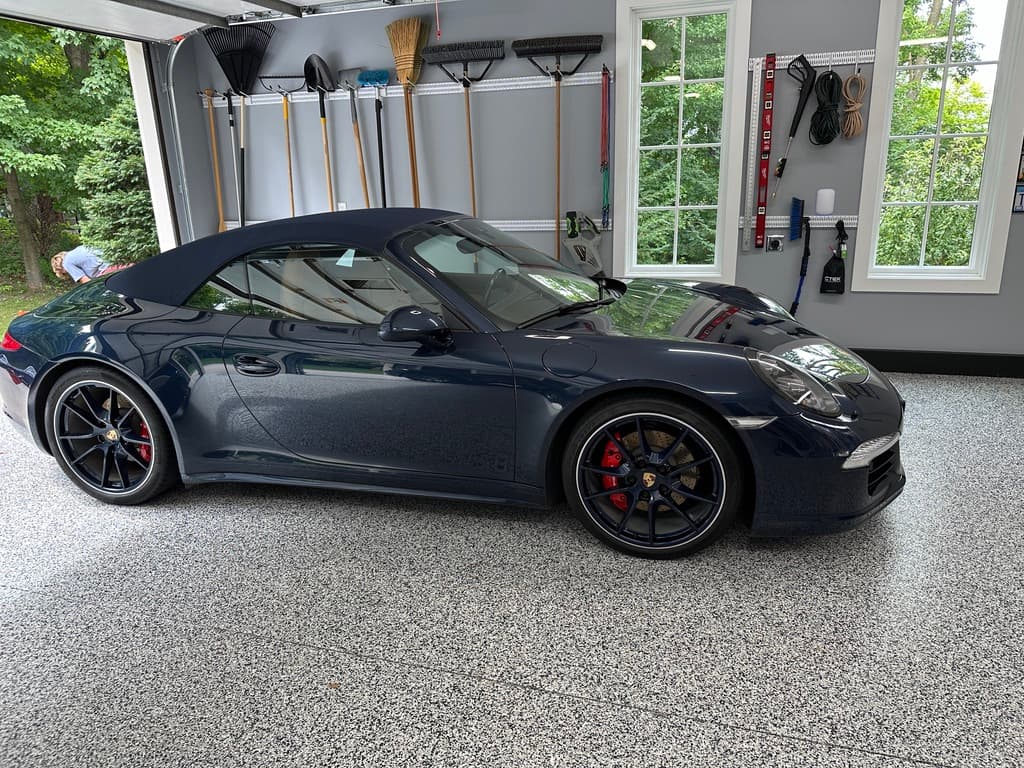
Paint Protection Film Marketing: How to Sell PPF to the Customers You Already Have
TL;DR
- A single PPF front-end install runs $1,500–$3,000. Your average ceramic job runs $500–$800. The math should tell you where your next revenue push goes.
- Your existing ceramic coating customers are your warmest PPF prospects — they've already paid for protection once, they understand the concept, and they trust you.
- Most detailers never pitch PPF to past customers because they assume the customer knows it's available. They don't.
- Cold acquisition for PPF is expensive. Warm reactivation of your existing list costs a text message.
- This article covers the exact system: who to target, what to say, and how to close a $2,000 PPF ticket without a sales script that makes you feel like a car dealer.
Every detailer doing ceramic coatings has a PPF problem and doesn't know it.
Not a demand problem. Not a lead problem. A pitch problem.
Your ceramic coating clients — the ones who paid $600 to $1,200 to protect their car's finish — are the single most qualified PPF prospects in your market. They already understand paint protection. They already trust you. They've already paid once for the peace of mind you sell.
And most of them have no idea you do PPF.
That is not a marketing failure. That is a communication gap. And it is costing you $1,500 to $3,000 per vehicle sitting in your client database right now.
Why PPF Marketing Works Differently From Everything Else You Have Done
Paint protection film marketing works differently from standard detailing marketing because the buyer already believes in protection — they just haven't been shown the next step.
The customer who paid for a ceramic coating is not skeptical of paint protection. They bought into the concept the moment they handed you the keys. What they lack is a clear reason to upgrade, a specific offer, and someone they trust to install it.
That's the complete sales cycle. You've already won two of the three.
Contrast this with cold acquisition — running Google Ads or Facebook campaigns to people who've never heard of you. You're starting at zero trust, competing on price in a market where the lowest quote usually wins, and spending $15 to $40 per click to reach someone who may book a basic wash package instead.
Your existing ceramic client list has higher intent, higher average ticket, and zero acquisition cost. The math is not close.
The Revenue Math You Need to Know Before You Market PPF
Before building any marketing system, understand what you're actually selling.
| Service | Average ticket | Material cost | Gross margin |
|---|---|---|---|
| Full detail | $250–$400 | $30–$60 | 82–88% |
| Ceramic coating (1 layer) | $600–$1,200 | $80–$150 | 85–88% |
| PPF front-end package | $1,500–$2,500 | $300–$600 | 75–80% |
| Full-body PPF | $3,000–$6,000+ | $700–$1,400 | 75–78% |
The margin percentages are similar across services. The ticket size is not.
One PPF front-end install at $2,000 generates roughly the same gross profit as three to four ceramic coating jobs. If you're running twelve ceramic jobs a month, converting two of those customers to PPF front-ends adds $4,000 gross to your month without a single new lead.
This is why the International Detailing Association consistently points to high-value add-ons as the primary lever for shops growing past $15,000 per month — not volume, not discounting, not new geographic markets.
Who to Target First (And Why the Order Matters)
Not all past customers are equal PPF prospects. Work this sequence:
Tier 1: Ceramic customers from the past 6–18 months
These clients paid for protection recently enough that the psychology is fresh. They remember the investment and the result. They are not in a new-car mindset yet — they are in a maintain-what-I-have mindset. A PPF pitch frames as "you protected the paint chemistry, now protect the paint surface from physical damage."
Tier 2: High-value vehicle owners in your database
Anyone who brought you a car valued over $40,000 is a PPF prospect regardless of what service they booked. A Model 3 owner who got a $350 interior detail may not have known PPF was an option. Now they know.
Tier 3: New vehicle inquiries
Any time a customer mentions they just bought a car or are picking one up soon, PPF is the first conversation. Factory paint is most vulnerable before the first drive through highway debris. Position PPF as the new-car protection step, not an upgrade.
The Message That Actually Converts
Most detailers who try to pitch PPF to past customers do it wrong. They send a generic offer blast — "We now offer PPF! Book your appointment!" — to their full list and get five responses out of two hundred contacts.
The message that converts is personal and specific.
Subject/opener: "[First name], I was looking at your file from [month] and had a thought."
Body (text or email): "You had [car make/model] coated back in [month] — that coating is protecting the paint chemistry perfectly. What it's not protecting against is rock chips and road debris on the front end. I've started doing PPF front-end packages specifically for clients who already have coatings. One chip in the right spot can cut through a coating and into the clear coat. If you're interested, I can walk you through what coverage would actually make sense for your car. No pressure either way — just thought you'd want to know the option exists."
Three things this message does that a generic blast does not:
- It references a specific past transaction, signaling this is a follow-up from someone who knows their car — not a mass marketing text.
- It introduces a real risk the customer did not have on their radar (rock chips bypassing coating protection) without manufacturing fake urgency.
- It positions you as the expert advising them, not a shop chasing a sale.
Send this to ten past ceramic customers. Expect three to five responses. Expect one to two bookings. That is a $3,000 to $5,000 return on twenty minutes of outreach.
How to Handle the "What Is PPF?" Conversation
The most common PPF objection is not price — it's unfamiliarity. Most customers asking "what does it do?" are actually asking "is this worth the money?" Answer that question first.
When a customer asks what PPF is, the wrong answer is a technical explanation. "It's a urethane film with self-healing properties applied to the exterior of the vehicle" tells them nothing useful and makes them feel like they're being sold something.
The right answer is a comparison they already understand:
"You know how your phone case takes the hits so your screen doesn't? PPF is that for your car's paint. The film absorbs rock chips, door dings, and road debris. On a good film, the surface heals itself when it gets scratched. Your coating protects against UV and chemical fallout. PPF protects against physical impact. They work together."
If they have any attachment to their car, that explanation closes most of the conceptual gap.
After that, show them a photo. Before-and-after shots of a rock-chipped bumper versus a PPF-protected bumper on the same vehicle type do more selling than any amount of explanation. Brands like XPEL and SunTek have published extensive comparison content you can reference in a follow-up text.
Building PPF Into Your Booking System
One reason detailers leave PPF revenue on the table is not unwillingness to sell — it is workflow. If your booking system treats PPF as a footnote, it never gets pitched consistently.
Fix this in three places:
1. Your inquiry intake
Any contact form or booking inquiry should include one question that flags PPF potential: "Is this vehicle new, relatively new, or does it have existing paint damage?" New or recent vehicles almost always have PPF potential.
2. Your estimate workflow
When you write an estimate for any exterior service — paint correction, ceramic coating, decontamination wash — include a PPF line item with a note: "Optional: PPF front-end protection for $X. Ask us if this makes sense for your vehicle." Do not wait for them to ask. Put it in front of them.
3. Your post-job follow-up
If a customer declines PPF when booking but still comes in for ceramic or paint correction, the 30-day follow-up text is your second chance. Something like: "Hey [name] — the coating on your [car] is looking great. If you ever want to talk about PPF for the front end before summer driving season, I'm doing a few installs this month and can fit you in. Just say the word."
This kind of systematic follow-up is what separates shops at $8,000 per month from shops at $18,000 per month. Same services. Same market. Different systems.
If you want to understand how to build this into your existing booking and follow-up workflow without replacing the tools you already use, the article on detailing booking software covers the system side.
Cold Acquisition for PPF: When It Makes Sense
Warm reactivation handles your fastest wins. Once you have worked your existing list, cold channels become worth the investment.
Google Search is where PPF buyers go when they're already decided. Someone searching "PPF installation [your city]" is in buying mode. A focused Google Ads campaign targeting that query at the local level, with a landing page that shows your work and leads to a fast quote, converts at 8–15% on a qualified click. At $20 to $35 per click, you're paying $140 to $440 to acquire a $2,000 job. That math works.
Instagram and TikTok are where PPF awareness lives — not direct-response ads, but the content that makes people say "I didn't know that existed and now I want it." Time-lapse installation videos, before-and-after hood panels, self-healing demonstrations with a heat gun. Post that content and the inbound inquiries follow.
What does not work for PPF: broad Facebook lead form ads. You will pay for leads from people who think PPF is a car polish and ghost you when they see the quote. If you're running Facebook ads for PPF, learn from the detailing business Facebook ads framework before spending on broad targeting.
The One Number That Should Drive Your PPF Marketing Budget
Take your average PPF job ticket. Multiply it by your close rate on warm outreach — typically 15–25% for a personally contacted past customer.
If your average PPF ticket is $2,000 and you close one in five warm contacts, each contact in your database is worth $400 in expected revenue. Reaching out to twenty contacts per month costs forty minutes of effort. Expected return: $8,000 in PPF bookings.
That is not a marketing expense. That is a system with a calculable return.
What You Need in Place Before Scaling PPF Marketing
Before running any PPF marketing campaign, confirm the fundamentals:
- Training and certification — XPEL, SunTek, and 3M all offer installer certification. Certification adds credibility and often unlocks brand marketing support and referral networks.
- A portfolio of completed work — Five to ten before-and-after sets across different vehicle types. A Porsche or Corvette installation documented well will generate more organic inquiry than a dozen generic social media posts.
- A clear pricing structure — Three tiers minimum: partial coverage (mirrors, door edges), front-end package (hood, fenders, bumper), and full-body. Ambiguity kills PPF sales faster than price objections.
- A quote process under 24 hours — PPF buyers comparison-shop. The shop that sends a detailed, professional quote first wins most of the time. If your turnaround is three days, you are losing jobs to whoever responds same-day.
- A follow-up sequence — One auto-reply confirming receipt of the inquiry, followed by a personal follow-up within five minutes of any lead coming in. PPF is a considered purchase — leads who go quiet after the first touchpoint often convert on the second or third contact. If you haven't read about the speed-to-lead framework for detailing, that is where the follow-up system starts.
Next Step
You already have the customers. You already have the trust. Paint protection film marketing, done right, is not about finding new buyers — it's about making a personal contact with the people who already paid you once and showing them the logical next step.
Start with your last thirty ceramic coating customers. Text ten of them this week using the message framework above. Track responses for thirty days.
If you want a full diagnostic on where your shop is leaving revenue behind — not just on PPF but across your complete client acquisition and follow-up system — take the free audit at detailpro.click/audit. It takes fifteen minutes and shows you the highest-ROI fix to make first.