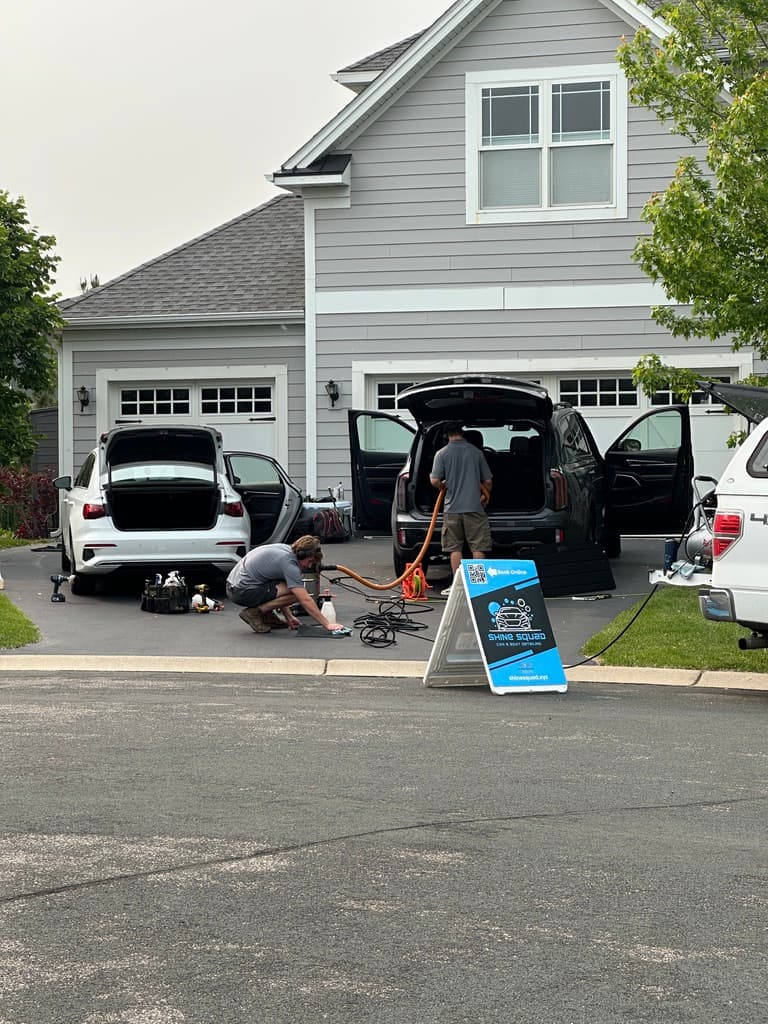
How to Market a Detailing Business: The System Built for Detailing Economics
If the marketing advice you're reading could apply equally to a plumber, a landscaper, or a personal trainer — it's not going to move the needle in your detailing business.
How to market a detailing business comes down to understanding which services you're selling and to whom. Ceramic coating, fleet maintenance, and standard washes each require a different acquisition strategy. Build marketing around your margin structure, not generic "post consistently" advice, and focus channels by service type and buyer intent.
TL;DR
- Generic marketing advice fails detailers because detailing has unique economics — ceramic margins, fleet recurring revenue, and a buyer who decides fast when the time is right
- Start with your business math: your highest-margin service should drive your marketing budget
- Google Business Profile and referrals are free, high-ROI channels most detailers underuse
- Run paid ads only after your close rate on existing leads is above 25%
- Fleet accounts are a marketing channel, not just a revenue line
Why Generic Marketing Advice Fails Detailers
Generic marketing advice fails detailers because detailing economics don't resemble other home services. A ceramic coating job generates the same net profit as 40–50 standard washes. Fleet contracts produce predictable monthly recurring revenue. Mobile and fixed-location shops have fundamentally different acquisition costs. Treating all three as identical wastes money and time.
Most "market your detailing business" guides tell you to post consistently on Instagram, get Google reviews, and run a referral program. That's not wrong — it's just incomplete. The reason it underdelivers is that it treats your detailing business the same way it treats a house cleaning company.
Detailing has service-specific economics that change everything:
| Service | Avg. Ticket | Purchase Frequency | Buyer Mindset |
|---|---|---|---|
| Standard wash/maintenance | $50–$150 | Monthly | Convenience-driven, price-sensitive |
| Paint correction | $400–$900 | Annual or less | Quality-driven, actively researching |
| Ceramic coating / PPF | $1,000–$3,000+ | Once every 3–5 years | Trust-first, comparison-shopping |
| Fleet account | $500–$2,500/mo | Recurring | ROI-driven, relationship-based |
Each row is a different buyer making a different kind of decision. A fleet manager for a landscaping company doesn't care about your Instagram Reels. A ceramic coating buyer is reading reviews for two weeks before they contact you. A maintenance wash client books whoever comes up first on Google Maps.
Marketing that ignores this will waste ad spend on the wrong audience or underinvest in channels that would close your highest-margin jobs.
Start With Your Business Math, Not Your Marketing Tactics
Before choosing where to market a detailing business, calculate your average ticket, identify your most profitable service, and trace where current clients came from. This tells you where to spend energy. If 60% of revenue comes from referrals, doubling referrals is worth more than any ad campaign.
Pull these three numbers before you spend a dollar on marketing:
- Average ticket by service type — What does each service actually net after product costs and time?
- Top revenue source — Is 70% of your revenue coming from 20% of your clients (the fleet accounts, the ceramic customers)?
- Current client origin — How did your last 20 clients find you? Google? Referral? Instagram? Repeat?
A real example: A detailer doing $12k/month might find that 4 ceramic coating jobs and 1 fleet account make up $8,000 of that — while 60 maintenance washes produce the remaining $4,000. The marketing math is obvious. One additional ceramic job per month adds $300–$500 net. One additional fleet client adds $800–$1,500 net and requires almost no additional marketing once landed.
That's where marketing energy goes.
The 4 Marketing Channels That Actually Work for Detailing
Not every channel makes sense for every service. Here's the breakdown by what actually converts for detailing businesses at the $5k–$20k/month level.
1. Google Search Ads — Highest Intent for Premium Services
People searching "ceramic coating near me" or "paint correction [city]" are actively comparing options and ready to book. They're not browsing. This is the highest-intent traffic available.
Google Ads for detailing makes the most sense for ceramic, PPF, and paint correction — services where the ticket is high enough to justify a $15–$40 cost-per-click. Running Google Ads for a $75 wash job math doesn't close; running them for a $1,500 ceramic job does.
Budget starting point: $500–$800/month in a mid-size metro. Track cost-per-lead, not impressions.
2. Google Business Profile — Your Free Lead Machine
The single most underused tool in detailing marketing. A fully optimized GBP can generate 10–20 qualified leads per month in a market of 50,000+ people — without any ad spend.
This gets its own section below because most detailers have 6 photos and 8 reviews and wonder why they're not getting map pack traffic.
3. Instagram and Facebook — Visual Proof Engine
Detailing is a visual transformation business. The work sells itself when the work is shown. Instagram and Facebook ads are primarily useful for two things: building local brand recognition through before/after content, and retargeting people who've already visited your website.
Cold Facebook ads for standard washes are rarely profitable. Warm retargeting campaigns for ceramic upsells often are.
4. Referrals and Reviews — Lowest Cost, Highest Conversion
A referred client arrives pre-sold. They've already heard from someone they trust that you do good work. Conversion rate on referred leads is 3–4x higher than cold traffic.
This doesn't happen automatically. It requires a system — covered below.
Google Business Profile: Your Free Lead Machine
A fully optimized Google Business Profile is the highest-ROI free marketing tool available to detailers. In markets of 50,000+ population, an optimized GBP with 20+ photos and 15+ reviews can generate 10–20 leads monthly with zero ad spend by appearing in the local map pack for service-specific searches.
Most GBPs are half-finished. Here's what "fully optimized" looks like:
- Services listed with descriptions and pricing ranges — Don't just say "ceramic coating." Say "Ceramic Coating (2-Year Protection) — $799–$1,499 depending on vehicle size." Buyers who see pricing self-qualify.
- Minimum 20 photos, ideally 40+ — Before/after pairs. Interior and exterior. Different vehicle types. Google surfaces businesses with more photos in map pack results.
- Review generation system — Ask every satisfied client within 24 hours of job completion. Text works better than email: "Hey [name], glad you're happy with the [service]. Would you mind leaving us a quick Google review? It helps a lot. [link]" Target 15+ reviews before running any paid ads.
- Respond to every review within 24 hours — Including the negative ones. Potential clients read how you handle complaints more closely than the complaint itself.
- Post weekly to your GBP — Before/after photos, service promotions, seasonal tips. Posts signal to Google that the profile is active.
If your GBP has fewer than 20 photos and fewer than 15 reviews, that's your highest-leverage marketing move this week. It costs nothing and produces measurable lead flow within 30–60 days.
Social Proof Is the Marketing: Before/After Content Strategy
Before/after content on Instagram and Facebook is the most effective social media strategy for detailers because detailing is a visual transformation service. A consistent 3x/week posting cadence with location tags and service-specific hashtags builds local brand recognition without any ad spend.
Detailing content doesn't need to be cinematic. It needs to be real.
Here's a 10-minute-per-job content system:
- Before photo — Quick shot of the panel or area being worked on before you start. Natural light, not under-garage fluorescent.
- During (optional) — 15-second clip of the correction or coating process. Rupes orbital on a dark paint panel with visible swirl removal. Flash time on a ceramic layer. This is what detail enthusiasts share.
- After photo — Same angle, same lighting if possible. The transformation does the selling.
- Post with location and service tag — "[Your city] ceramic coating — [vehicle]" as the caption. Include the city name. Instagram and Facebook index this for local search.
- One IG Reel per week — Compile the before/during/after into a 30-second reel. Add text overlay: service name, city, and price (optional). Reels get 3–5x the organic reach of static posts.
The goal isn't viral. The goal is consistent local visibility so that when someone in your market types "ceramic coating" into Instagram search, your profile shows up with 40 examples of your work.
That's a sales page. It's free. And it's compounding.
How to Turn Every Client Into a Referral Source
The referral ask should happen 24–48 hours after job completion — when client satisfaction is highest. A simple text script with a $25-off incentive for their next service generates referred leads at near-zero acquisition cost, with conversion rates 3–4x higher than any paid channel.
Most detailers either never ask or ask awkwardly at the wrong time. Here's the system:
Step 1: The timing. Not while you're still at the job. Send a text 24–48 hours later when they've had time to admire the work and show it to someone.
Step 2: The script.
"Hey [name] — hope you're still loving how the [Accord/truck/SUV] looks. If you know anyone who might want their car done, I'd really appreciate the referral. Send them my way and I'll take $25 off your next service. No complicated stuff — just have them mention your name."
Step 3: Track it. Add a line to your intake form: "How did you hear about us?" When a referred client books, text the original client immediately to confirm the discount is applied.
No app needed. No loyalty points system. $25 off their next service is enough incentive to prompt word-of-mouth from happy clients.
One referred client per week adds $2,000–$4,000/month in annual revenue depending on your service mix. That math is cleaner than any ad campaign.
Fleet Accounts as a Marketing Strategy
Fleet accounts aren't just a revenue source — they're a referral network.
Fleet clients operate within business communities. A dealership, rental fleet, or commercial contractor has vendors, employees, and business relationships. A single fleet account can generate 3–5 personal referrals in the first 90 days if the relationship is managed intentionally.
When you land a fleet account, treat it as a marketing asset from day one:
- Ask for an introduction at 60 days. After two successful services: "Do you have any other business owners in your network who keep a fleet? Happy to extend the same pricing."
- Leave cards in every vehicle you service. Fleet drivers, managers, and owners all have personal vehicles. The quality of your work on their company car is a live audition.
- Use the fleet logo in your social proof (with permission). "Proud to maintain the [Local Company Name] fleet" in your GBP posts signals commercial credibility and attracts other fleet managers who are watching their community.
A $1,000/month fleet account that produces two ceramic coating referrals per year is generating $3,000–$7,000 in total annual revenue from one relationship.
When to Start Running Paid Ads
This question gets asked before it should be.
Run paid ads only after your close rate on existing leads exceeds 25% and you have a documented follow-up system. Paid traffic into a broken pipeline accelerates losses, not growth. Fix the leak before fueling the funnel.
The order of operations:
- Audit your current pipeline first — Do you know your lead-to-booking rate? If not, you don't have enough data to know if ads will work.
- Fix follow-up — If your average response time to a new lead is over 5 minutes, paid ads will bleed money. The 5-minute window is the single biggest booking factor in detailing. After 5 minutes, answer rate drops by 80%. After 30 minutes, the lead is effectively cold. Fix your lead pipeline before spending on acquisition.
- Start with Google, not Facebook — Google captures demand that already exists. Facebook creates demand. For a detailer at $8k–$15k/month, capturing existing demand (people already searching for ceramic coating in your city) converts faster and more predictably than brand awareness campaigns.
- Build a retention system before scaling acquisition — Acquiring a new client costs 5–7x more than retaining one. A retention system that keeps your best clients booking annually is worth more than any ad campaign in year two.
Once close rate is above 25% and follow-up is automated — paid ads become a multiplication function on a working system.
The Detailing Marketing Stack, Ranked by ROI
| Channel | Setup Time | Monthly Cost | Best For | Avg. ROI Timeline |
|---|---|---|---|---|
| Google Business Profile | 2–3 hours | Free | All services | 30–60 days |
| Referral system | 1 hour | Free (discount cost) | Ceramic, repeat clients | Immediate |
| Before/after social content | 10 min/job | Free | Brand awareness | 60–90 days |
| Google Search Ads | 4–6 hours | $500–$1,500/mo | Ceramic, PPF | 30–60 days |
| Facebook Ads (retargeting) | 3–4 hours | $200–$600/mo | Upsells, warm leads | 60–90 days |
| Fleet cold outreach | Ongoing | Free | Recurring revenue | 30–90 days |
The International Detailing Association's business resources include market data and professional certification information worth bookmarking as you build your credibility positioning.
The Next Move
If your Google Business Profile has fewer than 20 photos and fewer than 15 reviews, that's your marketing priority this week. Not ads. Not a new Instagram strategy. Not a website redesign.
Spend two hours optimizing your GBP. Build a simple text-based referral ask. Post three before/after sets this week.
Those three actions cost nothing and have a higher ROI than most paid campaigns for a detailing business at the $5k–$15k/month level.
Once those are producing leads consistently — then you fuel the system with paid traffic.